One of the big advantages of a wrap is that it comes off: when you're tired of the colour, before you sell the car or to replace a damaged panel. Done properly, it reveals the original paint just as it was. All you need is heat, patience and the right technique.
When it's worth removing it
- When you're tired of the colour and want to go back to the original or try another.
- Before you sell the car or hand it back at the end of a lease.
- When the film on a panel has been damaged by a knock or a scratch.
- When it's old: it fades, cracks, or the edges lift and won't stick back down.
In that last case, don't leave it much longer: the more time old vinyl spends in the sun, the more brittle it gets and the harder it is to remove.
What you need
- A heat gun or a powerful hairdryer.
- A plastic scraper or spatula (never metal) to lift the corners.
- Gloves: they protect your hands from the heat and give you more grip.
- Isopropyl alcohol or an automotive adhesive remover, and microfibre cloths.
Where and when to do it
Work in the shade or under cover, out of the wind. When the car is very cold the film goes stiff and tears more easily; in strong sun, the adhesive gets too soft and leaves more residue. A mild day is ideal, and the heat gun does the rest. Work panel by panel: finish one before moving on to the next.
Step by step
- Wash the panel. That way you won't drag grit across the paint as you pull.
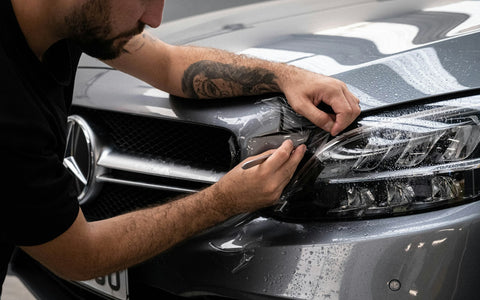
- Heat a small area. Heat gun at 15–20 cm, always moving, until the film is warm to the touch but not hot. The heat softens the adhesive so it lets go.
- Lift a corner with your fingernail or the plastic scraper.
- Pull slowly and at a low angle, almost parallel to the surface, folding the film back on itself. If you pull upwards, the adhesive stays on the paint.
- Heat as you go. If the film resists or tears, stop and heat it more.
The tricky areas
- Edges folded under rubber seals and trims: heat well and ease the film out with the plastic scraper, without forcing the seal.
- Corners and relief cuts: the film usually overlaps there. Lift the top layer first, then the one underneath.
- Badges and lettering: heat and lift the film with your fingernail or the scraper. Don't lever against the badge, as it can come loose.
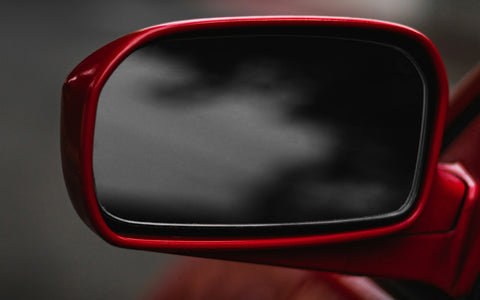
- Wing mirrors: if the housing comes off, it's easier to work on it off the car.
Getting rid of adhesive residue
With a quality vinyl removed properly, almost nothing is left. If there are traces, soak a microfibre cloth with isopropyl alcohol or adhesive remover, leave it a few seconds and rub gently. Then wash the panel and, if you like, apply a wax to bring back the shine of the paint.
If the film is old and breaks up
Vinyl that has spent years in the sun goes brittle and comes off in pieces. Don't worry: use more heat, work in small areas and pull even more slowly. On large panels, pulling in narrow strips helps a lot. It takes longer, but the result is the same.
Can it pull the paint off?
On original paint in good condition, no: the film has protected it all this time and comes off without any problem. The risk is with panels that have been resprayed without proper preparation, or where the lacquer is already peeling: the adhesive can then take a little paint with it. If you know a panel has been resprayed, use more heat, pull very slowly and try a hidden area first.
Mistakes to avoid
- Using metal tools. A metal scraper or a knife scratches the paint in a second.
- Pulling upwards. The adhesive stays stuck to the paint and is much harder to clean off afterwards.
- Overheating one spot. Always keep the heat gun moving: too much heat can damage plastics, rubber seals and headlights.
- Using harsh solvents. Acetone, petrol or general-purpose thinners can attack the lacquer. Isopropyl alcohol or an automotive adhesive remover is all you need.
- Rushing. If the film breaks into small pieces, it needs more heat and less speed.
What next?
If you're going to wrap it again, make the most of the clean panel: degrease with alcohol and apply the new film. If it's your first wrap, read how to wrap a car roof: the technique is the same for every part.
To fit the new film you'll need a felt-edged squeegee and a thin-bladed craft knife; everything is in vinyl wrap tools and accessories, or together in the DIY car wrap kit. And if you're only replacing one damaged panel, a short roll of vinyl by the metre will sort it.
Frequently asked questions
Can a wrap be removed without damaging the paint?
Yes. On original paint in good condition, if you heat the film and pull it slowly at a low angle, it comes off without damage. The risk is only with resprayed panels or peeling lacquer.
How do I remove vinyl adhesive residue?
With a microfibre cloth soaked in isopropyl alcohol or automotive adhesive remover: leave it a few seconds and rub gently. Never with a blade or an abrasive sponge.
How long does it take to remove a full car wrap?
Between four and eight hours, depending on the state of the film. Recent vinyl comes off quickly and in one piece; very old, sun-baked film comes off in pieces and takes longer.
Can I remove vinyl without a heat gun?
Yes, with a powerful hairdryer, although it is slower. In summer, leaving the car in the sun for a while also helps soften the adhesive.
Can I reuse the vinyl I remove?
No. When you heat and pull it, the film stretches and the adhesive loses its grip. To rewrap the panel you need new vinyl.
Will you be able to see where the vinyl was?
On original paint in good condition, usually not. On older cars, the covered area may look slightly brighter than the rest, because it's been protected from the sun. A wash and a wax help even it out.